

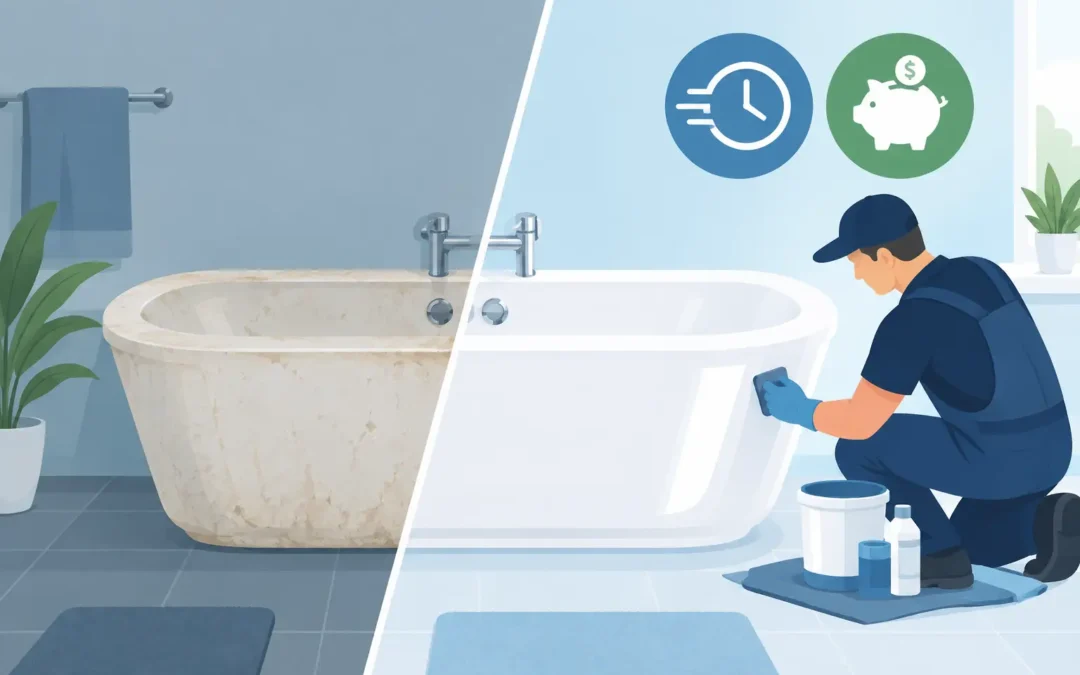
A stained, chipped bathtub can make an otherwise clean bathroom feel worn out. The usual assumption is that the tub has to come out, but bathtub reglazing gives many North Carolina homeowners a faster, more affordable option. Instead of paying for demolition, plumbing work, wall repair, and a new fixture, a qualified refinishing contractor can repair and coat the existing tub in a single scheduled visit.
That difference matters when you are preparing a home for sale, updating a rental, turning over an apartment, or simply tired of looking at rust stains and dull porcelain. Replacement can turn into a multi-day or multi-week project once tile, flooring, drywall, and plumbing are involved. Professional refinishing focuses on restoring the surface you already own, with far less mess and downtime.
What Bathtub Reglazing Actually Does
Bathtub reglazing is a professional surface-restoration process. It is not a quick coat of household paint and it is not the same as placing a liner over an old tub. The goal is to create a new, durable finish over a properly prepared existing surface.
A trained technician starts by cleaning away soap residue, body oils, mineral buildup, and other contaminants that can interfere with adhesion. Chips, cracks, rust spots, and damaged areas are repaired. The surface is then prepared mechanically and chemically so the bonding agent can grip the tub correctly. High-build primer and a chemical-resistant topcoat are applied using professional HVLP spray equipment for an even finish.
The result can make an old cast-iron, steel, fiberglass, acrylic, or cultured-marble tub look bright, clean, and current again. White remains a popular choice, but reglazing can also update a dated color when the underlying fixture is in good condition.
The quality of the preparation matters as much as the finish itself. A coating can only perform as well as the surface beneath it. That is why a professional job includes masking and protecting nearby walls, floors, fixtures, and ventilation areas before spraying begins.
When Reglazing Makes More Sense Than Replacement
Replacement is sometimes necessary, especially when a tub has major structural damage, severe flexing, extensive hidden water damage, or plumbing problems behind the wall. But many tubs that look beyond saving are still solid fixtures with surface-level issues.
Reglazing is often the practical choice when the tub has chips, scratches, stains, rust around the drain, faded color, worn fiberglass, or a rough finish that never seems to come clean. It can also be a smart move when the bathroom layout works well and you do not want to disturb existing tile or plumbing.
For homeowners, the biggest benefit is avoiding the chain reaction that comes with tear-out. A new tub may cost less than expected at the store, but the fixture is only one part of the expense. Removal, disposal, plumbing changes, tile replacement, drywall repair, flooring work, and labor can quickly push the total much higher.
For apartment communities, hotels, and property managers, time is equally valuable. Pulling out a tub can leave a room or unit unavailable for an extended period. Refinishing allows operators to address visible wear quickly while keeping turnover schedules moving.
The Professional Bathtub Reglazing Process
A reliable refinishing job should not feel rushed, even when it is completed quickly. Most standard tubs can be refinished in approximately three to five hours, depending on repairs, condition, and access. The coating then needs time to cure before normal use, usually 12 to 24 hours.
Professional Refinishing follows a detailed nine-step approach designed to address both appearance and long-term adhesion. While every tub has different needs, the work generally includes cleaning and decontamination, surface preparation, repairs, masking, bonding, priming, finish application, curing guidance, and a final walkthrough.
Repairs are especially important with fiberglass tubs. A chip or crack may need to be filled, reinforced, leveled, and sanded before coating. If that work is skipped or handled with the wrong materials, the damage can show through the new finish or fail early.
Spray application also separates professional reglazing from many do-it-yourself attempts. HVLP equipment atomizes the coating into a controlled, even spray pattern. When used by an experienced technician in a properly protected work area, it helps create the smooth, consistent finish homeowners expect from a restored tub.
What a Reglazed Tub Can and Cannot Fix
Reglazing changes the appearance and usability of a worn surface. It can cover discoloration, restore gloss, repair many chips, and make a dated bathroom look substantially newer without construction. It is particularly effective for cosmetic damage that cleaning products cannot remove.
It does not correct every underlying issue. A leaking drain, loose tile, unstable subfloor, failing plumbing, or tub that moves when someone steps into it should be investigated before refinishing. Coating over an active problem may make the tub look better temporarily, but it will not stop moisture damage or structural movement.
An honest inspection is worth more than a fast promise. A contractor should explain whether reglazing is appropriate, what repairs are needed, how long the room will be unavailable, and how to care for the finish afterward. This is also the time to discuss color, non-slip options, caulk lines, and any access limitations in the bathroom.
How Long Does Bathtub Reglazing Last?
A professionally refinished tub can provide many years of service when it is properly prepared, coated, and maintained. Professional Refinishing backs its work with a written 10-year warranty and states an expected lifespan of up to 20 years with proper care. Actual results depend on the condition of the original tub, the quality of the repair work, household use, ventilation, and cleaning habits.
The finish is durable, but it is still a coated surface and should be treated accordingly. Avoid abrasive powders, harsh scouring pads, and cleaners that contain aggressive solvents or acids. Use a non-abrasive liquid cleaner and a soft sponge or cloth instead. Rinse away soap and shampoo residue, and do not leave suction-cup bath mats attached to the tub surface.
It also helps to repair dripping faucets promptly. Constant water exposure in one location can wear on any finish over time. If you use a bath mat, choose one without suction cups and remove it after use so the surface can dry.
Why DIY Kits Often Cost More Than They Save
A store-bought refinishing kit may look like a bargain, particularly when a tub needs a fast cosmetic update. The challenge is that professional results depend on preparation, repair materials, ventilation, masking, coating chemistry, spray technique, and curing conditions. A brush-on or roll-on kit can leave visible texture, thin coverage, peeling edges, or uneven gloss if the surface is not prepared exactly right.
There is also the risk of having to pay for corrective work later. Removing a failed coating takes time and may require more extensive preparation before the tub can be professionally restored. For a guest bathroom with limited use, a temporary DIY repair may be acceptable. For a primary bathroom, rental turnover, hotel room, or home sale, professional application is usually the better value.
Get the Timing Right for Your Bathroom Project
Reglazing works best when it is scheduled at the right point in a larger bathroom update. If you are replacing faucets, shower trim, lighting, or a vanity, complete the dusty and invasive work first. Then schedule refinishing after surrounding repairs are finished and the room can remain undisturbed during curing.
Before the appointment, remove personal items from the bathroom and make sure the technician has clear access to the tub. Afterward, follow the cure-time instructions exactly. Waiting one extra day before using the tub is far less frustrating than damaging a fresh finish before it reaches full strength.
If your tub is stained, chipped, rusted, or simply stuck in another decade, start with a clear assessment rather than assuming replacement is the only answer. A few photos and an honest conversation about the tub’s condition can show whether refinishing will save your bathroom, your schedule, and a significant part of your renovation budget.
Ready to see what refinishing can do for your tub? Text a photo of your tub, shower, or tile and your city to 336-875-2110, and Professional Refinishing will text you back a free quote. Family owned in Asheboro since 2012 — most jobs are done in 3–5 hours and backed by a 10-Year Warranty.